

Just for Fun
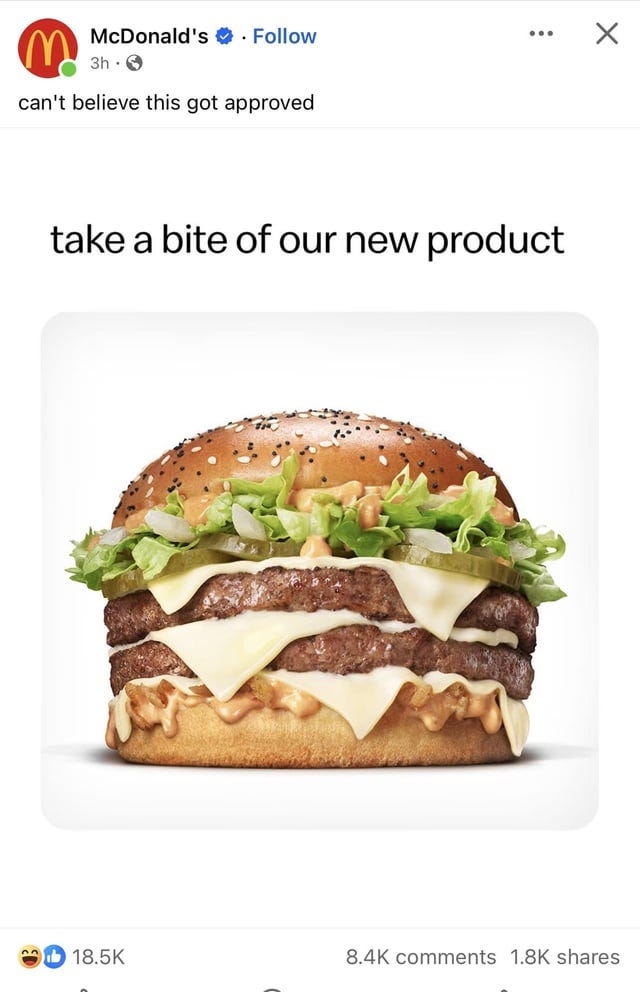
IYKYK, and if you don’t…. we get to this ^ by the end of this article.
Why Aren’t We More Embarrassed Online?
I recently found two LinkedIn posts (here and here) from women talking about their work. Both women happened to have cleavage visible in their photos. The comment sections had nothing to do with the original content. Despite the fact that the original post was business-related, the comments were full of stuff that any of us would be embarrassed to say at work. All with real names, real profile photos, one click away from their employer.
So why weren’t these people embarrassed to say them in the comments?
Science calls this the online disinhibition effect (ODE). Even when people reveal their identity online, they behave differently than they would face to face. The term comes from Dr. John Suler, a psychology professor at Rider University, who published a landmark paper in 2004 identifying six psychological mechanisms that cause people to lose their social inhibitions online—even when they’re not anonymous. His framework has been cited thousands of times, and 20 years later, it explains what’s happening on LinkedIn.
Here’s how ODE works: LinkedIn’s asynchronous communication means you can comment whatever you want, then close the tab. There’s no social consequence in real time: no eye contact, no body language feedback, no watching someone’s face change when you say something inappropriate. The person on the other end becomes text on a screen, not a living human being sitting across from you.
This is compounded by what Suler identified as solipsistic introjection: without face-to-face cues, people stop engaging with the actual person on the other end and start engaging with a version of that person they’ve constructed in their own mind. They assign characteristics, assume intentions, build a narrative. So when someone posts a video about their business strategy, the viewer doesn’t process them as a founder sharing insights—they process them as a character in their feed, onto whom they can project whatever reaction they’re having (in these 2 cases, cleavage). The original content becomes irrelevant because the commenter is responding to the person they invented.
But Kara, on LinkedIn? It’s a work platform ffs.
Yep. And turns out the professional framing makes it worse.
What makes LinkedIn fundamentally different from other social platforms is that the professional context doesn’t prevent inappropriate behavior the way it would in a real live workplace. It gives people the framework to justify it to themselves.
Researchers call this plausible deniability, and it’s the engine behind the specific kind of inappropriate commenting that thrives on LinkedIn. On Instagram, if you leave a sexual comment under someone’s photo, you’re being a creep and everyone knows it, including you.
On LinkedIn, that same impulse gets laundered through professional language. It shows up as: “I’m just saying, if you want to be taken seriously...” or “Not trying to be rude, but this is a professional platform...” or “I’d focus more on the message and less on the presentation.” Gross gets dressed up in a poorly ironed oxford.
Harvard’s public health research team calls this concern trolling — the use of positive or constructive-sounding language to frame an antagonistic message. Every one of those comments is about the person’s body, but the language has been engineered so that, if challenged, the commenter can retreat to: “I was just giving feedback” or “I was trying to be helpful.”
(It is worth noting that this behavior is not gendered. Both men and women participated in these comment sections.)
Suler’s research focused on one-to-one dynamics, but LinkedIn adds a layer he didn’t fully account for: the public performance element. Comments on LinkedIn aren’t private messages—they’re performances for everyone else reading the thread. And hostile comments don’t emerge from individual impulse alone—they emerge when other people are already being hostile, where users match the tone of the existing thread.
This means the first inappropriate comment on a professional post sets a frame (the whole “just saying what everyone else is thinking” vibe). It signals to everyone else reading: “this is what we’re talking about now.” The second person matches that tone. The third feels even more permission, and by the time you scroll 3 times, the entire comments section has become a conversation about the poster’s body or appearance on a post that was never about either. It’s a sort of permission to all be gross together.
LinkedIn’s own architecture contributes to the problem because it shows your comment to the poster’s entire network. It rewards engagement velocity, meaning controversial, emotionally charged comments that generate replies get amplified by the algorithm. A thoughtful comment about someone’s business strategy and a degrading comment about their appearance are weighted the same way by the algo gods because they don’t distinguish between engagement and harassment unfortunately, they just see activity.
What we’re seeing is a platform with a veneer of professionalism that allows people to disconnect their online behavior from their professional identity. They’re not anonymous, they’ve just convinced themselves that the rules are different here.
This same phenomenon is why your CEO won’t post on LinkedIn.
McDonald’s CEO Chris Kempczinski just became a global meme for taking the tiniest bb bite of their new Big Arch and calling it a “product.” (If you didn’t get the meme at the top of this email… nowyado.
Chris has been making content for six years, has 168K followers, and literally won an award for authentic executive communications. One (so so super bad) awkward video and the internet turned him into a punchline…but his follower count grew 30% because of it.
Behind the paywall: the real cost of staying invisible, what actually went wrong (and right) with the McDonald’s video, and how to build a public presence that survives the comment section.