

Just for Fun
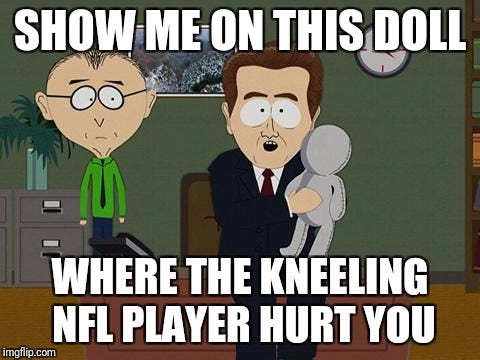
IYKYK, and if you don’t…. we get to this ^ by the end of this article.
“Brands Should Stay Out Of Politics”
“Brands should stay out of politics”
Under any post where a brand even mildly smells political, you’ll see a stream of variations on this comment.
But… should they? Do they? Do we even notice every time they do? Whether we want them to or not, brands do and always have influenced society.
Brands are among the top shapers of our social aesthetic. We use brands as a means to express our own identity. The clothes we wear, the music we listen to, the restaurants we frequent, even the neighborhoods we move into. When those brands align with certain ideologies, our association with them signals our own.
2026 has blessed us with two perfect case studies in what happens when brands touch politics — and they went in opposite directions:
1. Bad Bunny x NFL
Bad Bunny held up a football that said “Together We Are America” while listing every American country; Donald Trump called it an affront to America.
2. Hootsuite x ICE
In response to public outrage over Hootsuite’s contract to provide social media management and monitoring services to ICE, CEO Irina Novoselsky responded with a letter saying 2 conflicting things:
“Our use-case with ICE does not include tracking or surveillance of individuals using our tools.”
“Our technology…helps organizations understand…how people are feeling, and where trust is being earned or lost. Today more than ever, organizations need to hear more from the public, not less.”
The internet has responded by tearing her letter apart.
(Meanwhile, her bio:)

The contrast is the point:
Benito & the NFL made a statement and held it.
Hootsuite tried to have it both ways: condemning what ICE is doing while helping them do it.
One is a stance, held by principles; the other is dishonest and held by trying to perform values while cashing in.
This is not new
We like to assume brands getting political is a modern phenomenon. It’s not; we just see it more today because it’s amplified by social media.
Some of the most respected brands in the world have sat on distinct sides in history:
Coco Chanel was a documented Nazi intelligence agent, code name “Westminster,” who used her aristocratic connections to try to broker peace between Britain and Germany. After the war, she fled to Switzerland for a decade and she came back to Paris, relaunched her brand, and died one of the most celebrated designers in history.
IBM created a custom punch card technology to help the Third Reich identify and track Jews. Thomas Watson personally oversaw the relationship, received Hitler's medal in 1937, and IBM serviced machines on-site at concentration camps. (Market cap today: ~$232 billion.)
During apartheid, over 350 American companies operated in South Africa (GM, IBM, Coca-Cola, Kodak, Exxon) profiting from an economy built on racial segregation. It took 30 years of sustained global pressure before they divested.
Barclays Bank faced years of student sit-ins, customer boycotts, and mass account withdrawals throughout the 1970s and 80s for its ties to apartheid South Africa. The bank didn't fully exit until 1986.
Behind the paywall this week: How the "patriotic tradition" Bad Bunny was accused of disrespecting originated in a line item in a military marketing budget + the punchline to that meme.