

What do a chocolate heist, a shopping robot protocol, and Dyson grooming tools for dogs have in common?
This week was a master class for every brand that's been substituting vibes and tactics for an actual market position. Let’s get into it.
Someone stole 413,793 KitKat bars
Twelve tons of KitKat’s F1 collection were stolen from a truck somewhere between Italy and Poland last week. The truck is still missing.
So KitKat did whatever any insanely incredible brand would: turned it into an experiential campaign.
They launched a Stolen KitKat Tracker where you punch in the batch code on the back of your bar and find out if you’re holding stolen chocolate. They posted an evidence board like it was a scene from Taken. KitKat Canada started escorting delivery trucks with black SUVs like a presidential motorcade and they put out a job listing for a “Chief Chocolate Protection Officer.” They made a fake movie poster with Tubi.
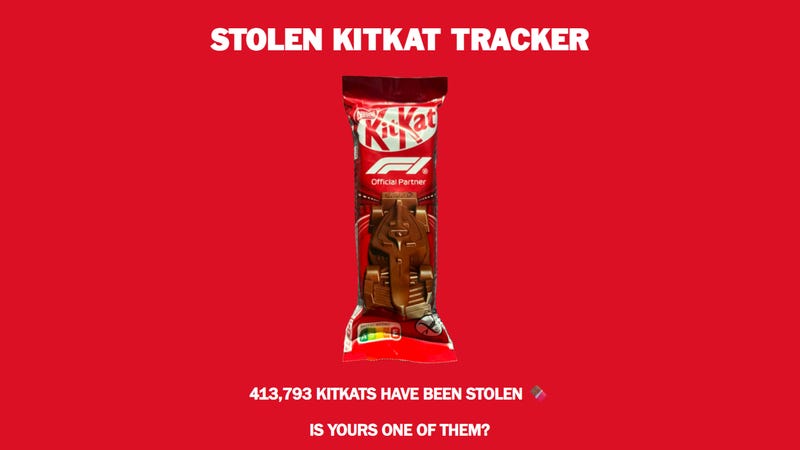
And other brands piled on all issuing their own fake “official statements” about the heist. The whole internet played along.
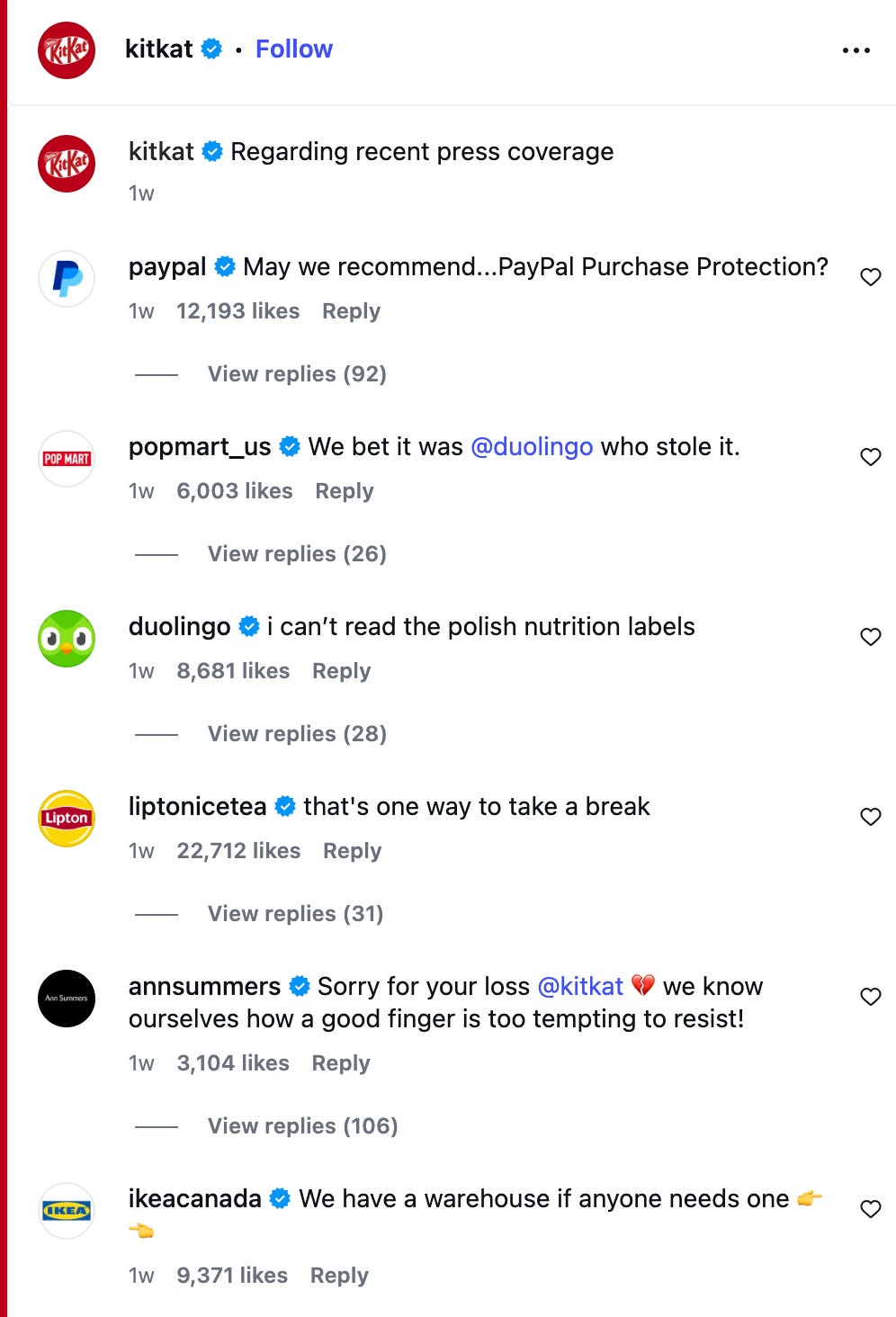
This matters because KitKat didn’t scramble, or convene a 72-hour crisis meeting to figure out whether they should be funny or serious. They didn’t hire a consultant to tell them their tone. Their CORE CENTRAL POSITIOINING “Have a break” is so specific and so embedded that when an actual crime happened, the creative wrote itself. The whole response was just the brand being itself louder.
Consider the last brand crisis you watched unfold where the statement read like it was word salad with no voice and nothing substantiative (cough, ahem Hootsuite, cough). Brands who turn crisis into opportunities to reinforce their brand turn positioning into a crisis playbook, a campaign platform, a creative brief, a reason to get up and do the damn thing…without a month’s worth of approvals because everyone “gets it.”
Your buyer’s next purchase might be made by a robot
Shoptalk just wrapped in Vegas and the word on everyone’s lips was “agentic commerce” which is the kind of jargon that makes me want to find out if my computer melts under a creme brûlée torch, but the concept underneath it is kinda wild: AI agents that don’t just recommend products anymore they are complete the entire purchase from discovery to checkout. Lord help my wallet, save me Tom Cruise! AMEX loves to see me coming.
Google launched something called the Universal Commerce Protocol. OpenAI, Shopify, Walmart, Stripe are all in. This is not a beta, folks it is LIVE infrastructure for machines to buy things on behalf of humans. OpenAI said that more than half the searches on ChatGPT are discovery-based, and 70% of those include situational constraints. Meaning people aren’t typing “blue shirt” anymore. They’re typing “a blue aesthetic to wear to a bridal shower in San Francisco, the dress code is formal, it’s April 5 research weather reports and pull options.”
The agent shopping on my your customer’s behalf is trying to understand what your brand means.. think less “product skus” and more contextual POV like you’d explain the vibe of your favorite store to a friend.
If your positioning is vague across digital sources (especially owned!), agentic commerce robots will skip your brand entirely in consumer searches.
This is, by the way, exactly what Jenna Hannon has been telling us about AI search visibility—that substance can’t be gamed. Turns out it also can’t be faked when the shopper is literally a machine.
(Meanwhile, at the same conference, Victoria’s Secret CEO Hillary Super coined “the soothing economy” which is the idea that customers are now drawn to brand experiences that feel comforting and confidence-building. Which is interesting when you put it next to the agentic commerce conversation, because it suggests the brands that will win the robot filter are the same ones winning the emotional one: the ones that are specific enough to make someone feel something. What a mindfuck. What a time to be alive.)
April Fools’ as a positioning litmus test
Normally I’d scroll past April 1st brand content (not because I don’t love the holiday but come on guys, we can do better) but this year Ad Age made the whole theme “the line between fake and real” and they were right.
Dyson announced premium hair tools for pets—the Airwrap Fur and the Airstrait Mane+Tail. IKEA Singapore turned its Allen key into wearable jewelry. Yahoo listed a “Scroll Stoppr” on TikTok Shop for $4.99 and no one could tell if it was a joke. Snapchat briefly rebranded as “Reals.”
The brands that won April Fools’ this year were the ones whose parody could have been a real product extension because as consumers, would anything really shock us anymore? Dyson doing pet grooming is funny precisely because it’s almost plausible because of how insane pet owners are (myself included). Dyson’s positioning is so specific (obsessive engineering of air flow technology) that stretching it to dogs is one boardroom vote from GTM.
So what’s the actual point?
Every one of these stories is a different lens on the same phenomenon: the tactics that used to cover for not having a real position have stopped providing cover.
The era of tactic-first brand marketing is ending and this was the week where it became blood-leaving-face-wtf scary.
Media spend still matters, performance metrics are alive and well, three cheers for your SEO playbook. You still need these things. But for a long time you could run them without a real platform or position underneath, and the ecosystem didn’t care because traditional digital platforms reward things like time and clicks, not POV. So everybody was all “brand doesn’t scale, it’s a waste of money” because the numbers were hot.

What changed is that machines are now surfacing substance at scale and they don’t care about your performance metrics. at. all. An AI agent doesn’t see your media spend or your analytics, it sees whether your brand can clearly answer a specific human question, and if it can’t, it skips you.
If you’re a leader sitting with all of this right now, feeling like the ground shifted and you’re not sure what to do, I think the uncomfortable truth is that the answer isn’t to optimize what you have to within an inch of its life. The answer is to commit to a real and polarizing and strategic POV that the right people, inside and out, can get behind.
✌️ Kara
Behind this week’s paywall: prompts for your Claude agent to test your brand’s AEO.